
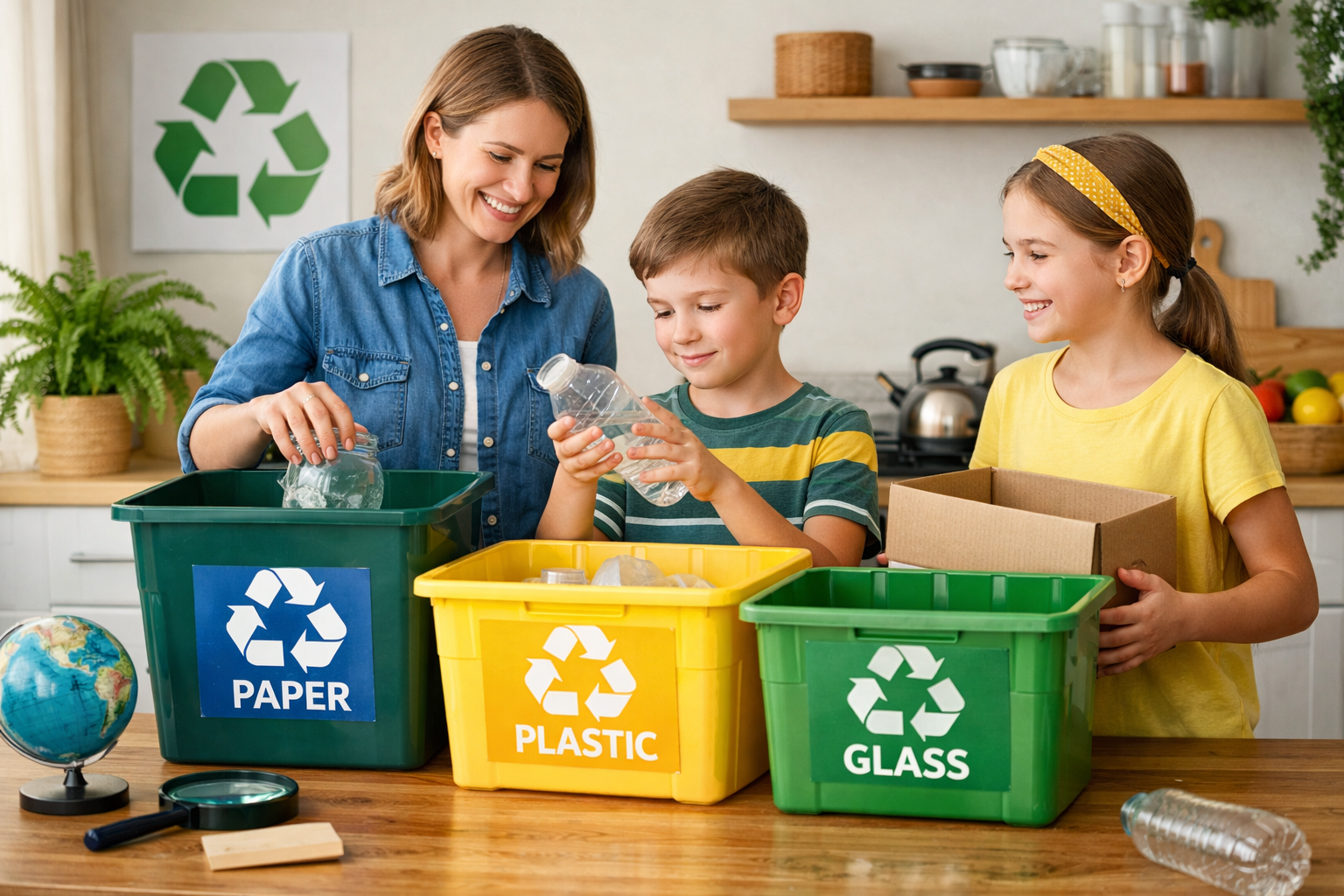
Recycling at home is often seen as a simple household task, something we do out of habit or responsibility. Yet for children, it can be much more than that. It becomes a powerful, everyday learning opportunity that introduces important ideas about sustainability and science in a practical and meaningful way.
When children take part in recycling, they begin to see how their actions connect to the wider world. They learn that small choices matter, that materials have value, and that science is not just something found in textbooks but something happening all around them. With the right guidance, recycling can become a rich educational experience that supports both academic development and personal responsibility.
Building an early understanding of sustainability
Sustainability can feel like a complex concept, even for adults. However, when broken down into simple, relatable actions, children can grasp its meaning more easily. Recycling at home provides a clear starting point.
When a child separates paper, plastic, and glass, they are learning that resources are not unlimited. They begin to understand that items can be reused or transformed rather than simply thrown away. This introduces the idea of reducing waste and protecting the environment in a way that feels concrete rather than abstract.
Parents can support this learning by talking through everyday decisions. For example, choosing a reusable bottle instead of a single use plastic one becomes a discussion about long term impact. Over time, these small conversations help children build a strong foundation of environmental awareness.
Making science visible in everyday life
One of the most valuable aspects of recycling is that it brings scientific concepts into daily routines. Children are naturally curious, and recycling offers countless opportunities to explore questions and ideas.
Materials behave in different ways, and recycling helps children notice these differences. Why can paper be recycled but some plastics cannot. What happens when glass is melted down and reshaped. Why do food containers need to be cleaned before recycling. Each question opens the door to scientific thinking.
Through these experiences, children begin to understand key scientific ideas such as materials, properties, and processes. They learn to observe, compare, and ask questions, all of which are essential skills in science education.
Encouraging responsibility and independence
Taking part in recycling gives children a sense of responsibility within the home. When they are trusted to sort materials or help with collection routines, they feel that their contribution matters.
This sense of ownership can be very motivating. Children are more likely to engage with tasks when they understand their purpose. Recycling is particularly effective because the outcome is visible. The bin fills up with sorted materials, and on collection day, they can see the result of their efforts.
Over time, this responsibility can grow. Younger children might start by helping to identify materials, while older children can take on more complex tasks such as rinsing items or organising storage. This gradual progression supports independence and confidence.
Linking recycling to school learning
Recycling at home can reinforce what children are learning in school. Topics such as materials, environmental science, and even geography often include elements of sustainability.
When children see these ideas in action at home, their understanding deepens. A lesson about plastic pollution becomes more meaningful when they are actively reducing plastic waste. A science topic about materials becomes clearer when they are handling different items and noticing their properties.
Parents can strengthen this link by asking simple questions. What did you learn about materials today. Can you see an example of that in our recycling. These conversations help children connect their learning across different contexts.
Developing critical thinking skills
Recycling is not always straightforward, and this is where valuable learning happens. Children may encounter items that are difficult to classify or materials that require special handling.
These moments encourage problem solving and critical thinking. Should a pizza box be recycled if it has grease on it. Why are some plastics labelled differently. What happens to items that cannot be recycled.
By exploring these questions together, children learn to think more deeply about processes and systems. They begin to understand that real world problems often require careful consideration rather than simple answers.
Creating meaningful routines at home
Consistency is key when it comes to learning. By making recycling a regular part of daily life, parents can create a routine that reinforces positive habits.
Simple systems work best. Clearly labelled bins, accessible storage, and a predictable routine all help children take part with confidence. When recycling becomes part of the normal rhythm of the household, it feels less like a chore and more like a shared responsibility.
It can also be helpful to involve children in setting up the system. Choosing labels, organising bins, or deciding where items should go gives them a sense of ownership and increases engagement.
Practical ways to involve children in recycling
There are many simple ways to make recycling more engaging and educational at home. The key is to keep activities age appropriate and to build on children’s natural curiosity.
- Ask children to help sort items into different categories and explain their choices
- Turn recycling into a quick daily challenge such as spotting recyclable materials around the home
- Explore what happens to recycled materials through short videos or discussions
- Use clean recyclable items for creative projects such as building models or crafts
- Talk about where waste goes and how recycling helps reduce landfill
These activities do not need to be time consuming. Even a few minutes of focused involvement each day can make a significant difference.
Supporting long term environmental awareness
One of the most important outcomes of recycling at home is the development of long term awareness. Children who grow up understanding sustainability are more likely to carry these values into adulthood.
This does not happen overnight. It is built through repeated experiences, conversations, and examples. When children see adults making thoughtful choices, they are more likely to adopt similar habits.
Recycling becomes part of a broader mindset that includes reducing waste, reusing materials, and considering environmental impact. These habits can influence decisions in many areas of life, from shopping choices to energy use.
Making learning positive and encouraging
As with any learning experience, encouragement plays a crucial role. Children respond well to positive reinforcement, especially when they are trying something new.
Praise effort rather than perfection. If a child makes a mistake when sorting materials, use it as a learning opportunity rather than a criticism. This helps build confidence and keeps the experience enjoyable.
It is also important to celebrate progress. Noticing improvements, such as remembering to recycle without being reminded, reinforces the value of the habit.
The wider benefits for child development
Beyond sustainability and science, recycling supports a range of developmental skills. It encourages organisation, as children learn to categorise and manage items. It supports communication, as they discuss choices and ask questions. It also builds awareness of the wider world and their role within it.
These skills are transferable to many areas of learning. The ability to observe, think critically, and take responsibility are all valuable both in school and beyond.
Conclusion
Recycling at home is a simple yet powerful way to support children’s understanding of sustainability and science. It transforms everyday routines into meaningful learning experiences that build knowledge, skills, and values.
By involving children in recycling, parents can help them develop a deeper awareness of the world around them. They learn that their actions have an impact, that materials can be reused, and that science is part of everyday life.
With consistent support, encouragement, and curiosity, recycling can become more than just a household task. It becomes a foundation for lifelong learning and responsible decision making.