
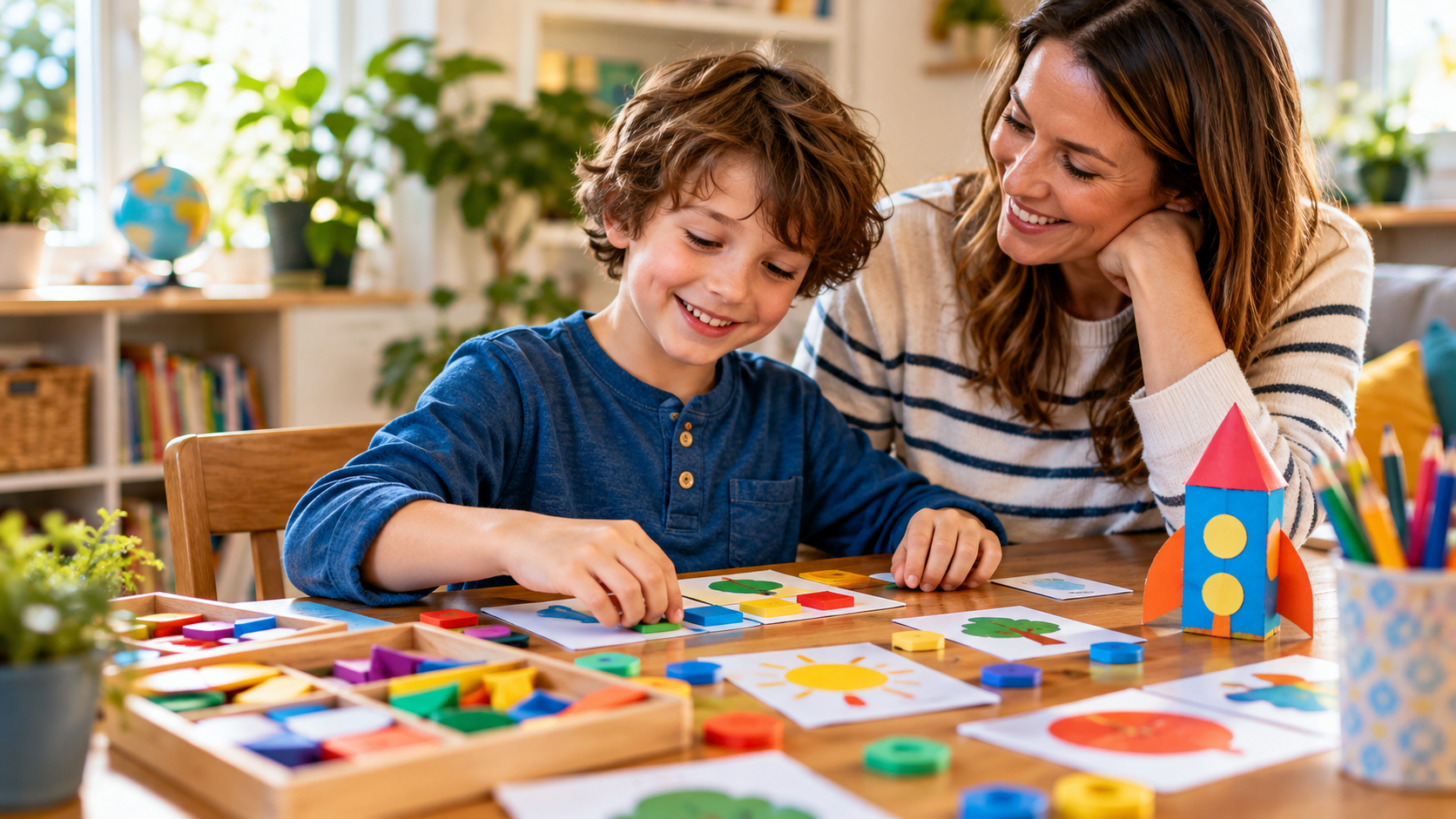
For children with dyslexia, confidence can be just as important as academic progress. When reading, writing or spelling feels more difficult than it does for their classmates, children may begin to question their abilities, even when they have plenty of strengths in other areas.
However, building confidence does not always require formal lessons or additional schoolwork. Everyday activities such as cooking, playing games, gardening and telling stories can provide valuable opportunities for children with dyslexia to experience success, develop independence and recognise what they are capable of achieving.
The key is to create opportunities where children feel comfortable experimenting, making mistakes and discovering their strengths without the pressure of being assessed.
Why Is Confidence Important for Children With Dyslexia?
Dyslexia is a learning difficulty that primarily affects reading, writing and spelling. Some children with dyslexia may also experience difficulties with working memory, organisation and processing information. Importantly, dyslexia is not related to intelligence, and children with dyslexia can have a wide range of abilities and interests.
According to the NHS guidance on dyslexia, children with dyslexia may experience frustration and difficulties with self-esteem. Encouraging them to discover their strengths and participate in activities they enjoy can be an important part of supporting their confidence.
A child who regularly struggles with written tasks may begin to associate learning with failure. They might become reluctant to attempt unfamiliar activities or worry about making mistakes in front of others.
Providing opportunities for success outside traditional academic settings can help challenge these perceptions. When children discover that they can solve practical problems, create something independently or learn a new skill, they have more opportunities to develop a positive understanding of their abilities.
1. Cooking and Baking to Develop Independence
Cooking is an excellent everyday activity for encouraging confidence because it combines practical learning with a visible outcome.
Following a simple recipe involves sequencing, measuring, recognising ingredients and completing instructions in the correct order. Children can also develop independence by taking responsibility for particular stages of the process.
For children with dyslexia, recipes can be adapted to make them more accessible. Parents might use pictures alongside written instructions, read each step aloud or divide a longer recipe into smaller sections.
For example, making homemade pizzas allows children to choose toppings, measure ingredients and assemble their own meal. They can make decisions throughout the process and see the results of their efforts.
The emphasis should be on participation rather than reading every instruction correctly. A child who finds written recipes challenging may still demonstrate excellent practical understanding.
Completing a recipe also provides a natural opportunity for specific praise. Rather than simply saying that the finished pizza looks good, parents might acknowledge how carefully their child measured ingredients or how independently they followed the steps.
2. Building Models and Solving Practical Problems
Construction activities offer children opportunities to explore ideas without relying heavily on written language.
Building with LEGO, creating cardboard structures or designing a marble run can involve planning, spatial awareness, experimentation and problem-solving.
A child might begin by building a bridge using cardboard and recycled materials. If the bridge collapses, they can investigate why it happened, adjust the design and try again.
This creates an environment where mistakes become part of the activity rather than something to avoid.
Parents can encourage independent thinking by asking questions such as, “What could make the bridge stronger?” or “What might happen if we change this part?”
The objective is not necessarily to produce a perfect model. Instead, children can experience the satisfaction of identifying a problem and developing their own solution.
For a child who frequently encounters difficulties with schoolwork, succeeding in a practical challenge can be particularly rewarding.
3. Playing Board Games Without Focusing on Winning
Board games provide opportunities to practise communication, decision-making, turn-taking and problem-solving in a relaxed environment.
Games involving visual patterns, matching, strategy or construction may be particularly appealing to children who find reading-intensive activities frustrating.
Parents can adapt games according to their child’s needs. For example, instructions can be explained verbally, written cards can be read together and additional thinking time can be provided.
It is also important to avoid making winning the main measure of success.
A child who loses a game but demonstrates patience, develops a strategy or tries something unfamiliar has still achieved something worthwhile.
Cooperative games, where players work together towards a shared goal, can be especially useful for children who find competition stressful.
Over time, these activities provide opportunities to practise handling setbacks and recognising that mistakes do not define their abilities.
4. Storytelling Without the Pressure of Writing
Children with dyslexia may have imaginative ideas but find it difficult to express them through written work.
Oral storytelling provides an alternative way to explore creativity, vocabulary and communication without requiring every idea to be written down.
Parents could invite their child to invent a story using toys, photographs or illustrations. Another option is to take turns adding sentences to a story, gradually creating an imaginative adventure together.
Older children might enjoy recording audio stories, designing comic strips or creating short videos.
These approaches allow children to concentrate on developing characters, organising events and expressing ideas.
The British Dyslexia Association also provides guidance on using accessible reading approaches, including audiobooks, to help children engage with stories and enjoy reading-related activities.
Listening to a story and discussing its characters can therefore be a valuable shared activity, even when a child is not reading the text themselves.
5. Gardening and Caring for Plants
Gardening provides opportunities for children to take responsibility for something and observe the results of their efforts over time.
Growing herbs, vegetables or flowers can involve planning, sequencing and following routines.
A child might choose which seeds to plant, prepare the soil and decide where the pots should be placed. They can then monitor growth and take responsibility for watering.
For children who find written instructions difficult, visual labels, photographs or simple diagrams can make the activity more accessible.
Gardening also provides natural opportunities to explore scientific ideas. Children can observe how sunlight, water and temperature affect plants and make predictions about what might happen next.
Importantly, progress is not always immediate. Some seeds take longer to germinate, while others may not grow successfully.
These experiences provide opportunities to discuss patience, perseverance and the importance of trying different approaches.
6. Using Everyday Shopping to Practise Decision-Making
Shopping can help children develop confidence in practical situations that involve communication, organisation and decision-making.
Younger children might help locate items on a shopping list, recognise familiar packaging or choose between two products.
Older children can take on more responsibility by comparing prices, working within a budget or planning ingredients for a meal.
If reading a shopping list is difficult, parents can use pictures, photographs or a digital checklist.
A child might also practise asking a shop assistant where an item is located or completing a purchase independently.
These experiences can help children recognise that they are capable of managing real-world responsibilities.
The aim is not to turn every shopping trip into a formal Maths or English lesson. Instead, it is to provide manageable opportunities for independence within familiar routines.
7. Creating Small Organisational Routines
Some children with dyslexia experience difficulties with working memory, planning and organisation. Remembering school equipment, following several instructions or preparing for the next day can therefore feel overwhelming.
Simple routines can help make everyday responsibilities more manageable.
The British Dyslexia Association provides practical advice for supporting children with dyslexia, including approaches to organisation, homework and independent learning.
At home, parents could introduce a simple evening routine that allows children to prepare their schoolbag, check their timetable and organise anything needed for the following day.
Initially, children may need guidance to complete each stage. Gradually, they can be encouraged to take greater responsibility.
A visual checklist can be particularly helpful because it reduces the need to remember several instructions at once.
Each successfully completed routine provides another opportunity for children to recognise their growing independence.
8. Encouraging Hobbies and Physical Activities
Confidence should not depend entirely on academic achievement.
Sports, music, drama, drawing, photography and other hobbies provide opportunities for children to discover interests and develop skills that are meaningful to them.
For example, a child who enjoys football may gain satisfaction from improving their passing or learning a new technique. Another child might enjoy photography because it allows them to communicate ideas visually.
These activities can provide a welcome change from schoolwork, particularly after a demanding day.
Parents should encourage children to explore different interests without assuming that every child with dyslexia will prefer the same type of activity.
Some children enjoy creative projects, while others prefer sport, technology, music or practical challenges.
The most important consideration is whether the activity allows the child to experience enjoyment, develop skills and feel a sense of achievement.
How Parents Can Build Confidence Through Everyday Activities
The way adults respond to children’s efforts can be just as important as the activities themselves.
Rather than concentrating exclusively on the final result, parents can acknowledge the strategies, persistence and decisions involved.
For example, recognising that a child tried several approaches before completing a task can help them understand the value of perseverance.
It is also helpful to provide children with appropriate choices. Allowing them to select a recipe, decide which game to play or plan part of a family activity can encourage a sense of independence.
Activities should be adapted to suit the child’s age, interests and individual needs. A task that is too difficult may create unnecessary frustration, while one that is too easy may provide little sense of achievement.
Finding a manageable level of challenge allows children to practise new skills while receiving support when necessary.
Most importantly, children need to know that struggling with reading or spelling does not diminish their abilities or potential.
Supporting Confidence Alongside Literacy Development
Everyday confidence-building activities are valuable, but they should complement rather than replace appropriate support for reading, writing and spelling.
Children with dyslexia may benefit from structured literacy teaching, accessible learning materials and individualised strategies that address their specific difficulties.
Parents can work with teachers and their school’s Special Educational Needs Coordinator (SENCO) to identify suitable support.
The British Dyslexia Association advises that children experiencing literacy difficulties should receive appropriate support based on their needs, rather than having to wait for a formal dyslexia diagnosis.
For some children, individual tuition can provide additional opportunities to practise challenging skills in a supportive environment.
A tutor who understands dyslexia can adapt the pace of learning, break tasks into manageable stages and use approaches that reflect the child’s individual strengths and needs.
This can help children experience progress in areas they previously found difficult, while developing strategies that support greater independence.
Building Confidence One Small Success at a Time
Building confidence for children with dyslexia does not have to involve expensive resources, complicated activities or additional academic pressure.
Cooking a meal, constructing a model, caring for a plant or learning a new game can all provide opportunities to experience achievement and develop independence.
These activities also allow children to recognise that learning happens in many different ways, not just through reading and writing.
When parents celebrate effort, encourage exploration and create opportunities for manageable challenges, children can begin to develop a more balanced understanding of their abilities.
With encouragement, appropriate support and opportunities to succeed, children with dyslexia can develop the confidence to approach new challenges both inside and outside the classroom.