
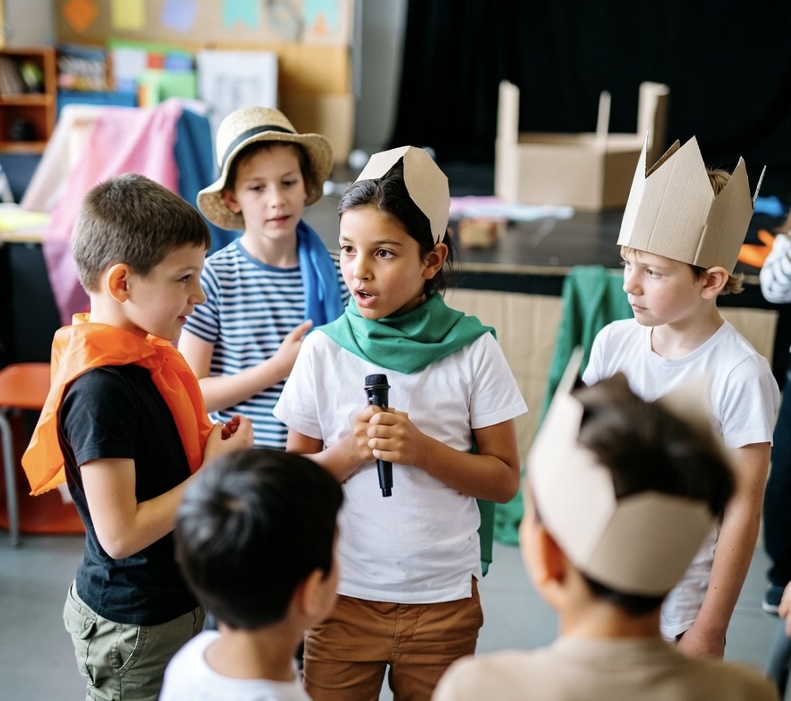
Children are natural performers. Give them a scarf and it becomes a royal cape. Hand them a spoon and it transforms into a microphone worthy of a stadium tour. Drama taps into this instinctive flair for imagination and turns it into something powerful. When children take on roles, explore emotions and collaborate in storytelling, they are not just playing. They are building confidence, nurturing empathy and learning how to understand the world beyond their own experience.
In this blog, we explore drama activities that boost confidence and empathy in kids, both at home and in structured drama classes. Whether your child is shy, bursting with energy or somewhere in between, drama can be a gentle spotlight that helps them grow.
Why drama activities matter for children
Drama activities for kids do far more than prepare children for a school play. They support communication skills, emotional intelligence and resilience. When a child steps into a character’s shoes, they begin to see situations from different perspectives. That simple act of role play can quietly stretch their empathy like a muscle being strengthened.
Confidence grows in a similar way. Speaking in front of others, improvising dialogue and expressing emotions all encourage children to trust their own voice. Over time, this trust spills into everyday life. The child who once hesitated to answer a question in class may begin to volunteer. The child who struggled to make friends may find it easier to connect.
Drama also encourages teamwork. In group activities, children learn to listen, respond and support one another. They realise that every role matters, from the lead character to the narrator. It becomes a shared adventure rather than a solo performance.
Drama classes that build confidence and empathy
Structured drama classes offer a safe, supportive environment where children can explore performance skills. These sessions are usually led by trained facilitators who understand how to guide children through exercises that build both confidence and empathy.
In drama classes, children might take part in improvisation games, script work, movement exercises and group storytelling. Improvisation in particular is a wonderful confidence builder. There is no script to hide behind, so children learn to think on their feet and trust their ideas. The room becomes a laboratory of imagination where mistakes are not failures but stepping stones.
Script work, on the other hand, helps children dive deep into character. They ask questions such as why does this character feel angry or what does this character want? This analysis encourages empathy. By exploring motivations and emotions, children begin to understand that behaviour is often rooted in feelings.
Performance opportunities, even informal ones, can also be transformative. Standing on a stage, however small, and hearing applause is a moment that many children carry with them for years. It tells them that their voice has value.
If you are considering drama classes for your child, look for groups that focus on personal development as well as performance. Some schools and local theatres offer weekly sessions, while others run holiday workshops. Community centres often provide affordable options too.
Simple drama activities at home
You do not need a stage or spotlight to enjoy the benefits of drama activities that boost confidence and empathy in kids. Your living room can become a theatre with very little preparation.
Role play is one of the easiest starting points. Create everyday scenarios such as a visit to the doctor, a trip to the supermarket or welcoming a new pupil to school. Take turns playing different roles. When your child plays the doctor, they practise authority and reassurance. When they play the patient, they explore vulnerability. Each switch gently builds empathy.
Story building games are another effective option. Begin a story with a single sentence and invite your child to add the next line. Continue taking turns, allowing the plot to twist and turn. This encourages listening skills and creativity. It also shows children that their contributions matter.
Emotion charades is a playful way to explore feelings. Write different emotions on small pieces of paper and take turns acting them out without words. Happy, nervous, frustrated, proud. As children guess the emotion, they learn to recognise facial expressions and body language. This awareness supports empathy in real life situations.
Puppet shows can also work wonders. Puppets create a slight distance between the child and the character, making it easier to express difficult emotions. A shy child might find it easier to speak boldly through a dragon or a rabbit than in their own voice.
You might try these at home
- Create a family theatre night where each person performs a short scene or monologue
- Turn a favourite book into a mini play and act out key scenes
- Use costumes from old clothes to inspire new characters
- Record short performances on a phone and watch them back together
- Invent a new ending to a well known fairy tale and perform it
Keep the atmosphere light and encouraging. The goal is not perfection. It is exploration.
How drama supports shy children
For some parents, the idea of drama activities may seem daunting, especially if their child is naturally quiet. However, drama can be particularly beneficial for shy children.
Drama provides structure. Instead of speaking as themselves, children speak as a character. This can feel safer. The character becomes a shield, allowing the child to experiment with confidence in a protected way.
Small group activities are often less intimidating than large performances. Pair work or trio improvisations can help shy children ease into participation. Over time, as they experience positive feedback and gentle encouragement, their confidence grows.
It is important to avoid pressure. Celebrate small steps, such as speaking a single line clearly or maintaining eye contact during a scene. Confidence is built brick by brick.
Building empathy through character exploration
Empathy is the ability to understand and share the feelings of others. In a world that sometimes feels fast and fragmented, this skill is invaluable.
Drama activities that boost confidence and empathy in kids often centre around character exploration. When children are asked to imagine life from another perspective, they stretch their emotional awareness.
For example, you might explore a story about a child who has just moved to a new country. Ask your child to act out how that character might feel on their first day at school. Nervous, excited, lonely. Then discuss those feelings afterwards. What would help that character feel welcome. How could others show kindness.
This type of guided reflection helps children connect actions with emotions. It moves empathy from an abstract idea to a lived experience, even if only within the safe frame of a story.
Teachers often use drama techniques such as hot seating, where one child sits in-role as a character and answers questions from others. This encourages deeper thinking about motivations and feelings. You can try a simple version at home with a favourite book character.
Drama and emotional regulation
Another overlooked benefit of drama activities for kids is emotional regulation. Acting requires children to identify and control emotions. They may need to portray anger without actually losing their temper, or sadness without becoming overwhelmed.
Through rehearsal and repetition, children practise moving in and out of emotional states. This can help them manage strong feelings in real life. They learn that emotions can be expressed safely and creatively.
Improvisation games also encourage resilience. When a scene does not go as planned, children must adapt. They learn to cope with uncertainty and recover from mistakes. This adaptability strengthens confidence.
Choosing the right environment
When looking for drama classes or workshops, consider the ethos of the group. A supportive environment is essential. Children should feel safe to experiment and make mistakes without fear of embarrassment.
Speak to the facilitators about their approach to confidence building and empathy. Ask how they handle nervous children or those who struggle with teamwork. A good drama leader understands that the aim is not simply to produce a polished performance but to support personal growth.
At home, you set the tone. Offer praise that focuses on effort and creativity rather than perfection. Instead of saying That was brilliant because you remembered every line, try saying I loved how clearly you spoke and how you showed that character’s feelings.
Long term benefits of drama activities
The skills developed through drama activities that boost confidence and empathy in kids often extend far beyond childhood.
Confident communication is valuable in school presentations, job interviews and everyday conversations. Empathy supports healthy friendships and strong family relationships. The ability to see another person’s perspective can prevent conflict and encourage kindness.
Many adults look back on drama classes as a turning point. Not because they became professional actors, but because they discovered their voice. They learned that it was acceptable to take up space, to express ideas and to connect with others through storytelling.
Grande Finale
Drama is not just about applause and costumes. It is about connection. It is about giving children a safe stage on which to explore who they are and who they might become.
Whether through weekly drama classes, school productions or simple role play at home, drama activities that boost confidence and empathy in kids offer lasting benefits. They nurture brave voices and compassionate hearts. And in doing so, they prepare children not only to perform, but to participate fully in the world around them.